
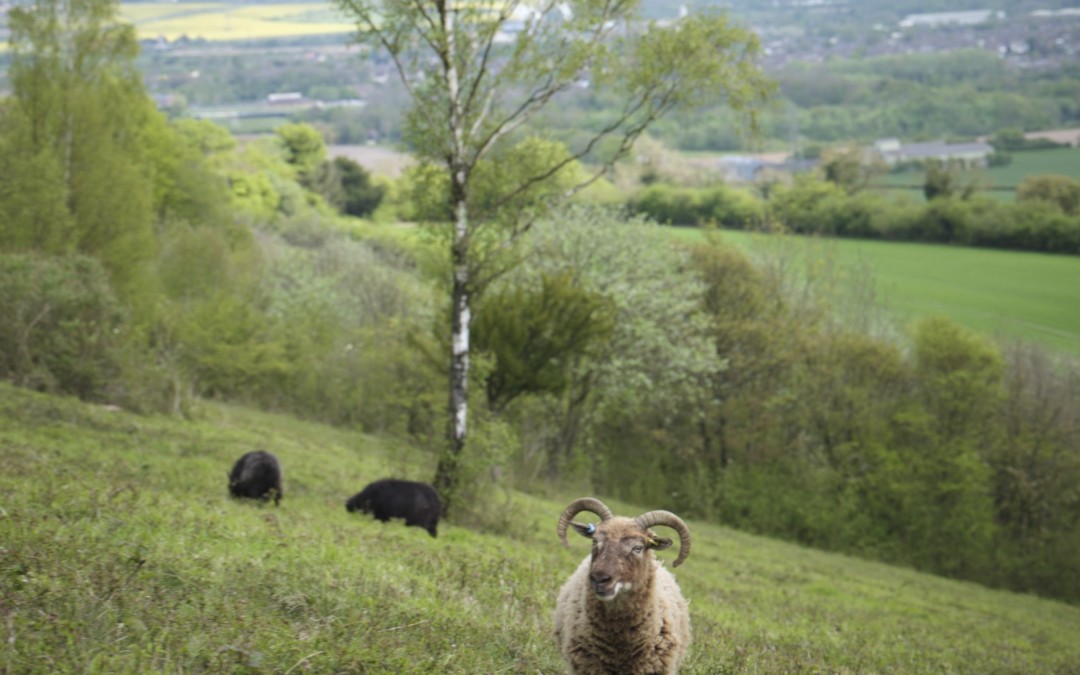
May is here, and with it comes one of our favourite times of year on the estate. The hedgerows are frothing with cow parsley, the birds are in full voice, and the chalk hills are beginning to flush with the first flickers of colour that make this landscape so special.
It’s also the month that No Mow May lands in the national conversation – and we’re fully behind it.
Why No Mow May Matters
The idea is simple: put down the mower for the month of May and let your lawn, verge or patch of ground do what nature intended. Dandelions, clover, speedwell and herb robert – the plants we’ve spent decades treating as weeds – are in fact vital food sources for bees, hoverflies and butterflies at precisely the moment they need it most. Research has shown that even a single month of reduced mowing can dramatically increase the number of flowering plants and the insects that depend on them.
But here at Birling, we’ve long understood that the relationship between grass and grazing is more nuanced than simply leaving things alone. For our most precious habitat on the estate, the answer isn’t no management – it’s the right management.
Our SSSI Chalk Grassland
The chalk hills at Birling are home to one of Britain’s rarest habitats: lowland chalk grassland. Sometimes called the rainforest of Europe, a well-managed chalk sward can support up to 40 species of flowering plant per square metre. It is this habitat that supports the rare Straw Belle moth, the jewel-like Chalk Hill Blue and Adonis Blue butterflies, and a remarkable community of specialist plants found almost nowhere else.
Chalk grassland is not a habitat that manages itself. Left ungrazed, rank grasses and scrub quickly move in, shading out the low-growing wildflowers beneath. The key is light, consistent grazing pressure – and for that, you need the right animals.
Native Breeds for a Special Landscape
We conservation graze our SSSI with native breed hill sheep – predominantly Hebridean and other hardy, small-framed breeds ideally suited to the thin, nutrient-poor soils of the North Downs. Unlike commercial breeds, they graze selectively, targeting coarser grasses while leaving finer-leaved wildflowers to thrive. Their light hooves don’t compact the fragile chalk soil, and their grazing creates the varied sward structure that invertebrates, reptiles and ground-nesting birds all need. Traditional farming doing exactly what it was developed over centuries to do.
A New Chapter – Welcome, George
Last year brought a significant challenge when our long-term grazier made the difficult decision to step back. Finding the right replacement matters enormously – the knowledge and commitment required to run a conservation grazing programme on sensitive chalk grassland is considerable.
We’re delighted to say we’ve found exactly the right person. Through our partnership with the North Kent Woods and Downs National Nature Reserve, we were connected with George, an experienced grazier who shares our commitment to managing this landscape with care. Welcome to the Birling team, George.
A Shared Vision for the North Downs
As an Affiliate Partner Member of the NNR, we are part of a growing collaboration working to restore and protect this nationally important landscape at scale. One of the most exciting developments to emerge from this partnership is a Grazing Strategy covering the NNR as a whole – currently in development – which aims to coordinate grazing resources and expertise across the reserve.
Crucially, the strategy will also help to make the case for additional funding for fencing and practical infrastructure, enabling conservation grazing to be extended into areas lost to scrub encroachment. Much of what was once open chalk grassland on the North Downs has, over decades of reduced grazing pressure, been slowly colonised by hawthorn and bramble. Bringing sheep and goats back to these areas could unlock a genuine restoration opportunity – converting scrub back into species-rich chalk grassland and expanding the habitat available to the wildlife that depends on it.
We’ll be watching George’s flock do what they do best on the chalk hills above Birling – and we can’t wait to see what the coming seasons bring.
Recent Comments