
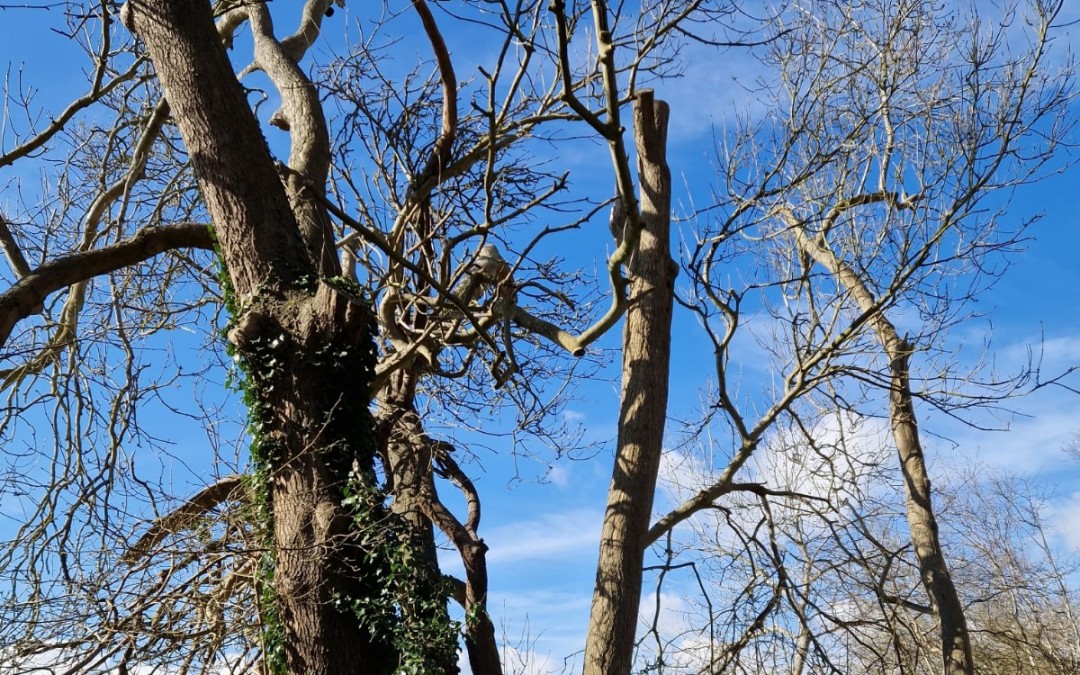
What is Ash Dieback?
Ash dieback is a fungus that was first identified in the UK in 2012 and which is quickly spreading throughout the UK. It is estimated that it will lead to the loss of up to 99% of our native Ash trees.
Ash dieback causes branches and eventually whole trees to die and collapse, making them particularly unsafe along busy footpaths and bridleways.
How are we managing Ash Dieback?
Birling Estate operates a Tree Risk Management Plan, inspecting trees across the Estate to identify any that may be a risk to members of the public. There is a rolling programme to deal with the highest risk trees.
You may notice some trees along footpaths/permissive routes across the Estate have been marked with paint, these trees are scheduled for coppicing or limb reduction. There may also be stands of Ash trees that have to be coppiced in their entirety and will not necessarily have been marked up.
What is coppicing?
Ash trees can be coppiced, along with other natives such as Sweet Chestnut, Hazel, Oak, Lime and Sycamore. Coppicing involves the felling of the main stems. New shoots will spring up from the ‘stool’ that remains, using the huge root network that already exists. Coppicing has been used to manage woodland for centuries and is an important part of maintaining the health of both the tree and surrounding biodiversity.
See the National Trust for more information on coppicing.
Any suitable timber will be processed through the Birling Estate sawmill to produce planks for construction or furniture.
What to expect
The next programmed works are to the Pilgrims Way; works will commence on 15 January 2024, and are scheduled to take two weeks. This has been scheduled in consultation with The Forestry Commission, Kent County Council Public Rights of Way, North Downs National Trail and Natural England.
While tree felling is taking place in proximity to the Pilgrims Way and North Downs Way, Birling Estate Forestry staff may temporarily close the route, you may be asked to stop in a position of safety before continuing your journey.
In dead or dying Ash, particularly where Honey fungus is present, the risk of branches breaking and the tree falling in an uncontrolled manner is high.
Please stay safe by observing path closure signs and instructions from Forestry staff.
You should also be aware that tree felling works will involve high noise levels which may be disturbing to horses or dogs.
Next steps
Where it is safe to do so, unaffected or partially affected trees are being left and monitored in the hope that they have some resistance and can provide the next generation of Ash trees.
Some trees will be reduced, providing standing dead wood, a fantastic habitat for invertebrates, which in turn provide food for birds and mammals.
Although it is sad to lose so many of our Ash trees, our woodlands will recover and, where necessary, will be replanted with other native tree species.
For more information, please email office@birlingestate.co.uk
You can also direct any complaints to the KCC Public Rights of Way and Access Service Team.
Recent Comments